Table of Contents
1. Introduction: Beyond the Shell – The Evolution of Hydrothermal Experience
2. Deconstructing Discomfort: The Inherent Flaws of Conventional Spa Architecture
3. The Core Innovation: Closed-Cell Foam as a Structural and Sensory Platform
4. Engineered for the Human Form: Principles of Dynamic Ergonomic Support
5. The Holistic Sanctuary: Integrating Thermal, Acoustic, and Sensory Harmony
6. Proven Wellness: Documented Hydrotherapeutic Benefits of Advanced Soaking
7. Responsible Relaxation: The Sustainability Credentials of Modern Foam Construction
8. The Personalized Paradigm: Customization as the Future of Home Wellness
9. Conclusion: The Immersive Standard – A New Blueprint for Home Hydrotherapy
Beyond the Shell – The Evolution of Hydrothermal Experience
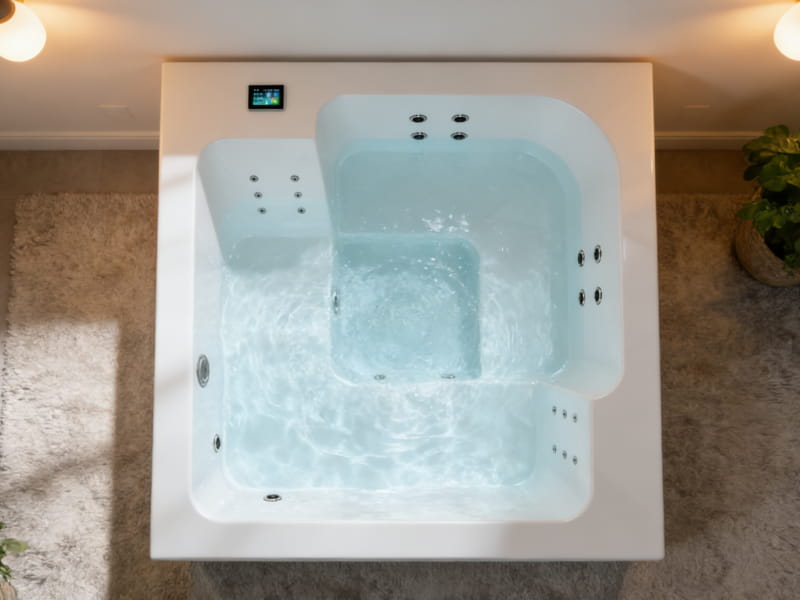
The pursuit of perfect relaxation through water is as old as civilization itself. Today's residential spa represents the technological zenith of this quest, yet a significant disconnect often remains between its promise and the user's experience. Traditional designs, while proficient in hydraulics and heating, have historically treated the human interface as an afterthought—a hard, static container for warm, moving water. The result is a passive experience where the bather must conform to the tub's rigid geometry. Emerging from this paradigm is a new design philosophy that places primal, multisensory comfort at its core. This article examines the transformative shift toward foam spa construction, a holistic approach that re-engineers the hydrothermal experience "from the inside out." We will explore how this technology, central to the modern foam tub, addresses fundamental limitations and fosters a deeper state of physical and mental restoration, moving the industry from generic seating to personalized immersion .
Deconstructing Discomfort: The Inherent Flaws of Conventional Spa Architecture
To appreciate the innovation, one must first diagnose the endemic issues of standard hot tub design. These are not mere inconveniences but structural characteristics that actively undermine the therapeutic goal.
The Rigidity of Traditional Materials: Acrylic and roto-molded plastics are chosen for durability and manufacturing efficiency, not biomechanical compatibility. Their unyielding nature creates concentrated pressure points—on the sacrum, shoulder blades, and calves—that can lead to discomfort and restlessness, contradicting the goal of prolonged, healing soaks .
Thermal Inefficiency and "Cold Shell" Syndrome: These materials are thermal conductors. A substantial portion of the energy used to heat the water is constantly lost through the shell to the external environment. This not only increases operational costs but can also create a perceptible temperature gradient, where the water is warm but the surrounding walls feel cool to the touch, breaking the sense of enveloping warmth .
The Resonance Chamber Effect: A hard shell acts as an amplifier for mechanical noise and vibration. The obligatory hum of circulation pumps, the chatter of jet turbines, and the shudder of heating cycles are transmitted directly into the soaking environment. This acoustic pollution is a significant detractor from mental tranquility, preventing the deep relaxation necessary for stress relief .
Static and Assumptive Ergonomics: Fixed seating contours represent a compromise based on population averages. They cannot accommodate the vast diversity of human anthropometry—variations in spine curvature, leg length, and torso proportions. Consequently, jet placements often miss their intended therapeutic targets, reducing the efficacy of hydro-massage .
The Core Innovation: Closed-Cell Foam as a Structural and Sensory Platform
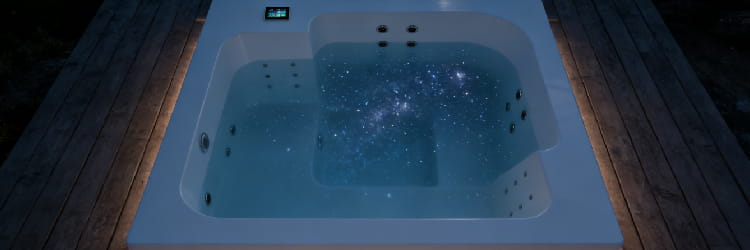
The pivotal advancement lies in adopting high-density, closed-cell foam as a primary structural component. This is not an accessory layer but the foundational matrix of the foam tub, redefining material properties to serve comfort and efficiency intrinsically.
Superior Insulation as a First Principle: The closed-cell structure traps inert gas within millions of microscopic pockets, creating a powerful thermal barrier. This dramatically reduces conductive and convective heat loss. The result is exceptional energy efficiency, with systems requiring significantly less power to maintain temperature, leading to quieter and less frequent heater cycles .
Inherent Sound and Vibration Dampening: The same cellular structure that insulates thermally is exceptionally effective at absorbing acoustic energy and mechanical vibrations. Operational noises from pumps and jets are muffled, and more importantly, the transmission of structural vibration is virtually eliminated. This creates the notably "quiet and vibration-free" experience cited as a hallmark of advanced designs, crucial for undisturbed relaxation .
A Foundation for Soft-Contact Safety: The material's inherent give provides a safer, more forgiving interface than any hard shell. It mitigates impact risk and reduces the potential for slipping, making the spa environment more accessible and secure for users of all ages .
Manufacturing Flexibility: Foam fabrication techniques, such as precision molding, allow for complex, monolithic structures that are both lightweight and robust. This process enables the integration of conduits for plumbing and jets directly into the spa's body during formation, enhancing reliability and design cohesion .
Engineered for the Human Form: Principles of Dynamic Ergonomic Support
With an adaptive material base, ergonomics evolve from static shaping to dynamic support systems. The goal is to create a "cradle" that distributes weight evenly and aligns the body optimally for both relaxation and therapy.
Zonal Support Mapping: Advanced designs utilize sculpted contours with varying densities to target key anatomical zones. A firmer, precisely shaped lumbar ridge provides essential support for the lower back's natural lordotic curve, while softer, broader surfaces cradle the thighs and shoulders. This systematic approach alleviates spinal compression and promotes neutral alignment .
The Conformity and Buoyancy Synergy: The slight give of the foam, combined with water buoyancy, creates a unique sensation of weightless support. The tub conforms minutely to the individual, reducing pressure points far more effectively than any hard surface. This synergistic effect is often described as a "weightless floating" sensation, foundational to deep muscular release .
Active vs. Passive Posture Design: Ergonomic research informs distinct seating profiles. Deeply reclined lounger positions are engineered for full-body immersion and cervical support, facilitating total relaxation. Upright social seats are contoured to maintain comfortable posture during conversation. This variety allows users to select settings based on their intended activity—from therapeutic solitude to social interaction .
The Holistic Sanctuary: Integrating Thermal, Acoustic, and Sensory Harmony
True comfort is a multisensory state. The foam spaworld concept deliberately engineers an environment where all sensory inputs promote calm.
Uniform Radiant Warmth: Exceptional insulation ensures heat remains within the water and the immediate air layer. The walls of the spa themselves retain warmth, contributing to a consistent, radiant thermal envelope that enhances core relaxation from the moment one enters .
Auditory Serenity: The dramatic reduction in operational noise and the absence of vibrating surfaces lower the auditory stress load. The dominant sounds become the gentle movement of water and the user's own breathing, facilitating a meditative state. This acoustic management is a critical, non-negotiable component of the modern wellness spa .
Tactile and Visual Cohesion: The soft, seamless interior eliminates visual and tactile harshness. Integrated, adjustable LED lighting can be used to support chromotherapy principles, using specific colors to promote calm, energy, or balance, further personalizing the sensory journey .
Proven Wellness: Documented Hydrotherapeutic Benefits of Advanced Soaking
The comfort provided by these systems is not merely subjective; it enables and enhances recognized hydrotherapeutic modalities.
Buoyancy Therapy: The feeling of "weightless floating" has a physiological basis. Buoyancy reduces gravitational stress on joints and the spine by approximately 90%, relieving pressure on intervertebral discs and facilitating freer movement and stretching in a safe, supported environment .
Thermotherapy and Circulation: Immersion in warm water (ideally between 100-104°F or 38-40°C) causes vasodilation, increasing blood flow to muscles and soft tissues. This delivers more oxygen and nutrients while aiding in the removal of metabolic waste products like lactic acid, accelerating recovery from exertion and soothing stiff joints .
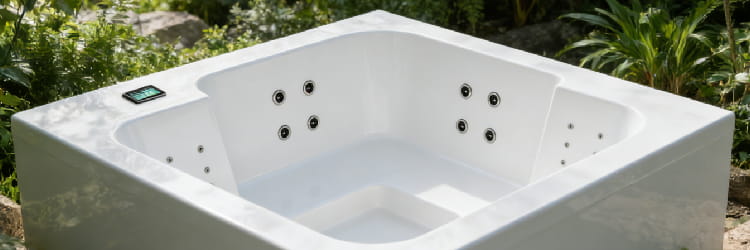
Hydro-Massage for Myofascial Release: Targeted jet streams provide percussive and pulsating massage that can help break down muscular adhesions and trigger points. When combined with ergonomic positioning that properly exposes muscle groups to the jets, this massage becomes significantly more effective for relieving tension in areas like the shoulders, lower back, and calves .
Stress and Mental Health Benefits: The combination of warm water, gentle massage, quiet isolation, and sensory deprivation from external stimuli prompts the body to lower cortisol (stress hormone) levels and increase the production of endorphins and dopamine. This biochemical shift promotes relaxation, improves mood, and can contribute to better sleep patterns .
Responsible Relaxation: The Sustainability Credentials of Modern Foam Construction
In an eco-conscious market, long-term comfort is inseparable from environmental responsibility. The foam spa platform aligns with this ethos through its inherent efficiency and design philosophy.
Radically Reduced Energy Consumption: The superior insulation properties directly translate to lower electricity usage. Over the lifespan of the product, this represents a substantial reduction in both carbon footprint and operating expenses, making sustainable comfort economically viable .
Durability and Lifecycle Considerations: High-grade closed-cell foams are resistant to water absorption, UV degradation, and microbial growth, ensuring structural integrity and hygiene over many years. This longevity is a key sustainability metric, reducing the frequency of replacement and associated resource consumption .
Efficient Production and Portability: The molding process can be more material-efficient than traditional fabrication, minimizing waste. Furthermore, the lightweight nature of the finished product reduces the energy cost of transportation and often eliminates the need for heavy, concrete-based structural supports during installation, simplifying the footprint .
The Personalized Paradigm: Customization as the Future of Home Wellness
The ultimate expression of "inside-out" design is tailoring the environment to the individual. The foam tub platform is uniquely suited to this trend, pushing toward bespoke wellness solutions.
Adaptive Contouring and Jet Personalization: Forward-looking concepts explore user-adjustable or selectable lumbar support modules and interchangeable jet packs. This allows the spa to be fine-tuned for different family members' specific needs, whether for athletic recovery, chronic pain management, or general relaxation .
Form and Integration Freedom: The manufacturing flexibility of foam enables designs that transcend standard oval or round shapes. Spas can be crafted to fit unique architectural niches, incorporate built-in steps or planters, or be seamlessly integrated into decking, creating a cohesive outdoor living space .
Digital Integration and Smart Wellness: The future points toward integration with digital wellness ecosystems. Imagine spas that sync with wearable devices to recommend soak duration and temperature based on sleep data or workout intensity, or that use guided breathing exercises paired with ambient light sequences to enhance the restorative experience .
The Immersive Standard – A New Blueprint for Home Hydrotherapy
The evolution from "sitting in" to "sinking into" a spa marks a fundamental recalibration of priorities in hydrothermal design. It is a shift from an engineering-centric model to a human-experience-centric one. The rise of the foam spa is not a minor iteration but a foundational change, proving that comfort, efficiency, and tranquility can be engineered into the very medium of the product.
By leveraging the intrinsic properties of advanced foam composites—transforming them from mere insulation into the structural and sensory core—this approach solves multiple traditional pain points simultaneously. It delivers silent operation, radical energy efficiency, and, most importantly, ergonomic support that actively conforms to and cares for the human body. The documented benefits of hydrotherapy, from improved circulation to stress reduction, are thus magnified within an optimized environment.
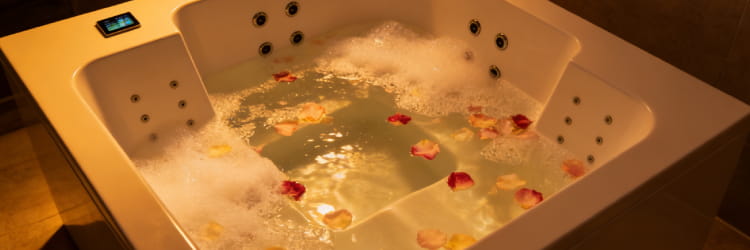
As this technology progresses toward greater personalization and smart integration, it sets a new benchmark for what home wellness can be. The promise is no longer just a tub of hot, bubbly water, but a personalized sanctuary for restoration—a true foam spaworld engineered from the inside out to dissolve the boundaries between user and vessel, inviting a deeper, more profound, and truly immersive state of repose .